Content Health
- Identify the importance of a Content Standard.
- Identify the purpose of the metadata field for Article Confidence.
- Identify the purpose of the metadata field for Article Audience (formerly Visibility).
- Identify the benefits of Just-In-Time publishing.
- Identify the elements of the KCS methodology that contribute to the creation of quality KCS articles.
Content Health – Technique 5.3: Developing a Content Standard (Exam Only)
Purpose of a Content Standard
- Defines how articles should be written
- Promotes:
- Consistency
- Predictability
- Quality
- Communicates expectations across the organization
- Implemented as:
- Formal document
- Template
- Help text in tools
How Much Structure Is Enough?
- Enough to:
- Capture required information
- Maintain consistency
- Not so much that it slows capture
- Balance is critical
Standardization vs Customization
- 70–80% of the content standard is common across organizations
- 20–30% is tailored to:
- Knowledge domain
- Division
- Organization
- Avoid over-customization
What a Content Standard Must Define (Know This List)
Article Structure
- Fields and definitions for:
- Issue
- Environment
- Resolution
- Cause
- Metadata
Good vs Bad Examples
- Shows contrast
- Reinforces intent of field definitions
- Helps people learn faster
Metadata Definitions
- What each attribute means
- How it is set:
- Manual
- Automated
- Implications of each value
Article Confidence
- Defined by article state
- Indicates reliability of content
Article Audience
- Who can see the article
- Internal vs external access
- Defined by article state
Article Governance
- Required for:
- Compliance
- Legal
- High-risk content
- Defined by article state
Templates
- List of available templates
- Criteria for when to use each
- Instructions for filling fields
- Keep number of templates low
Style Guide
- Preferred writing style
- Tone and voice
- Supports readability and reuse
Supporting Material
- Rules for:
- References
- Links
- Avoid duplication
- Ensure relevance
Vocabulary
- Preferred terms per audience
- Consistent:
- Product names
- Versions
- Platforms
- Supports:
- Findability
- Trademark protection
Multi-Language Considerations
- Writing guidelines for easier translation
- Promote International English
- Improves global usability
Multimedia Considerations
- When to use:
- Images
- Video
- Audio
- Based on:
- Audience
- Content type
Quick Reference Guide
- One-page writing aid
- Tips and reminders
- Aligned with full content standard
Ownership of the Content Standard
- Owned by knowledge workers
- Designed by a cross-functional team
- Created by people who:
- Use the content
- Create the content
Enterprise Considerations (Exam Trap)
- Different groups may have different standards
- Must still align with enterprise-wide needs
- Avoid fragmentation
Key Exam Traps
- Content standard owned by QA ❌
- One-off documentation effort ❌
- Heavy governance for all content ❌
- Unlimited templates ❌
Content Health – Technique 5.2: KCS Article State (Exam Only)
What Is Article State
- Article state is defined by three metadata fields:
- Confidence
- Audience
- Governance
- Article state controls:
- Trust
- Visibility
- Who can create or modify content
- State changes as articles are used and improved
Article Confidence
- Indicates how confident we are in the article
- Supports the article life cycle
- Knowledge is never complete → confidence evolves
- Life cycle is non-linear
Confidence States
Work in Progress (WIP)
- No resolution yet
- Issue + some environment captured
- Created early (often at first search)
- Purpose:
- Avoid duplicate work
- Enable collaboration
- Temporary state
When incident closes: - Delete WIP if resolved by existing article - Move to Not Validated or Validated if resolution added - Archive/delete if no value captured
Not Validated
- Article has a resolution
- Confidence is low
- Common reasons:
- No reuse yet
- Created by KCS Candidate
- Not fully compliant with content standard
- Supports capture everything
- Users must apply judgment before using
Efficiency rule: - Do NOT review all Not Validated articles - Let reuse drive review
Validated
- Article is complete and reusable
- Confidence comes from:
- User confirmation
- Responder validation
- Experience
- Must comply with content standard
- Created or reviewed by licensed users
Archived
- Used to remove articles from search
- Preferred over deletion
- Preserves:
- Links
- History
- Can be restored later
Confidence Transitions (Exam Logic)
WIP → Not Validated
- Resolution added
- Low confidence or created by Candidate
WIP → Validated
- Licensed user
- Confident resolution
- Content standard met
Not Validated → Validated
- Reused by licensed user
- Confidence gained
- Content standard met
Any State → Archived
- No longer valuable
- Removed from search, not deleted
Demand-Driven Review Rule (Very Exam Important)
- Do NOT review articles without demand
- Reuse = review
- Exceptions:
- Coach + Candidate work
- Evolve Loop analysis
Article Audience (Who Gets to See What)
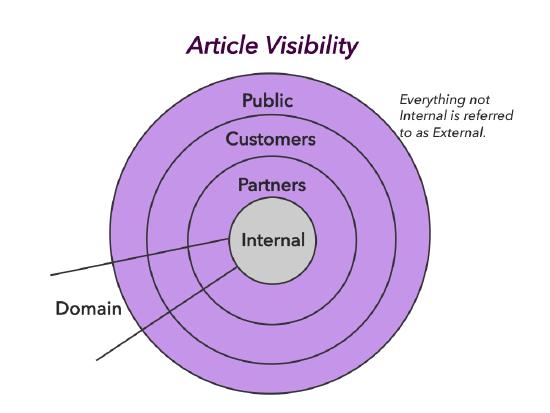
- Controls visibility
- Business rules use:
- Audience
- Confidence
Audience Levels
- Internal – employees only
- Within a Domain – specific group
- Partners – trusted external users
- Customers – registered users
- Public – anyone (e.g. Google indexed)
Anything beyond Internal = External
Demand-Based External Visibility
- Early adoption:
- External visibility based on reuse
- This is temporary
- Mature KCS:
- Just-in-time publishing
- Articles shared externally quickly
90/0 Goal (Exam Favorite)
- 90% of articles available externally
- At or before case closure
- Drives self-service success
Publisher Responsibilities
- Publishers can modify Validated articles
- Non-publishers:
- Flag articles
- Set to Not Validated for review
- Do NOT remove risky public articles silently
- Escalate if customer harm is possible
Article State Matrix
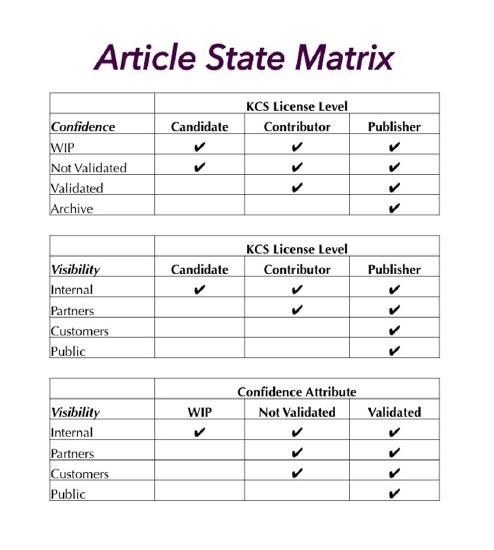
- Maps:
- Audience
- Confidence
- Governance
- Defines access rules
- Recommended reference document
Article Governance (Who Can Create or Modify)
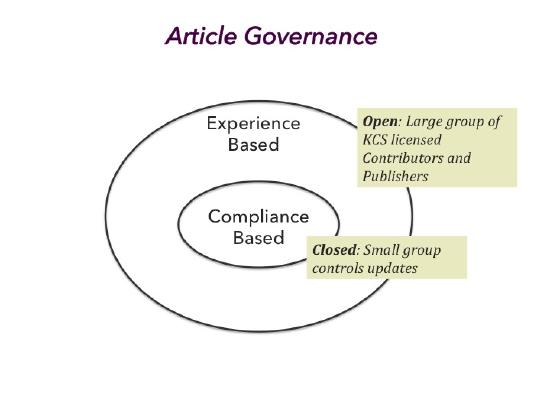
Experience Based
- Open governance
- Most common
- Many contributors
- License controls confidence and audience
Compliance Based
- Restricted governance
- For:
- Policy
- Legal
- Regulatory content
- Only designated users can modify
- Everyone can comment
KCS Stagnation (Very Exam Important)
- Occurs when article flow stops
- Common causes:
- No self-service
- Articles not made external
- Result:
- No reduction in repeat issues
- Participation drops
- KCS fails
Key rule: - Articles being reused must flow forward
Time Value of a KCS Article
- Knowledge value declines rapidly
- Major loss after ~30 days
- Traditional publishing (60–90 days) misses value
- KCS supports just-in-time accuracy
Key Exam Traps
- Review everything ❌
- WIP articles are bad ❌
- Not Validated articles are useless ❌
- External only after heavy reuse ❌
- Delete instead of archive ❌