Improve
Technique 4.1: Reuse Is Review (Exam Only)
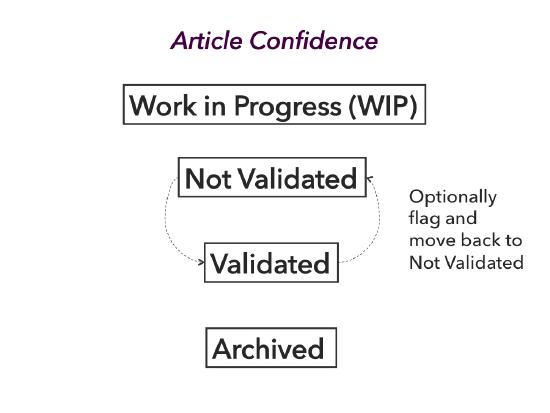
Core Idea
- Reuse = review
- Articles are validated and improved when they are used
- Quality comes from day-to-day use, not separate review steps
- Knowledge base is collectively owned
Collective Ownership
- This is our knowledge base
- Represents the best we know right now
- Anyone interacting with an article is responsible for its quality
- Best validators = people who use the article
Why We Improve During Reuse
- We cannot predict future value of knowledge
- If an issue is worth solving → it is worth saving
- Capture everything, let reuse determine value
The 80/20 Rule (Very Exam Important)
- ~80% of articles are rarely reused
- ~20% of articles solve ~80% of issues
- This pattern is normal and expected
- We do NOT pre-judge which articles matter
Demand-Driven Quality
- Articles that are reused get improved
- Articles never reused are not reviewed
- Prevents wasted effort
- Makes KCS scalable and efficient
Self-Service Impact (Exam Context)
- Self-service demand is much higher than assisted support
- Many issues are:
- Solved via self-service
- Never logged as incidents
- We lack context to predict what knowledge will be valuable later
Early Adoption Behavior
- Let reuse identify valuable articles
- Improve only what is being used
- No dedicated QA or editorial team required
- Avoid after-the-fact knowledge engineering
Built Proficiency Phase
Just-in-Time Publishing
- Enough Publishers to publish quickly
- Fast feedback loop required
- Requestors participate by:
- Reporting unclear articles
- Reporting incorrect resolutions
- Corrections must be fast
What NOT to Do (Exam Traps)
- Review every article ❌
- Pre-approve all articles ❌
- Editorial QA teams ❌
- Delay publishing for perfection ❌
Solve Loop Responsibility
- Responders are responsible for:
- Articles they use
- Fixing or flagging issues
- Each reuse improves article quality
- Focus effort only where value exists
Key Exam Lines (Memorize)
- Reuse is review
- If it's worth solving, it's worth saving
- The best people to review knowledge are the people who use it
Improve – Technique 4.2: Flag It or Fix It (Exam Only)
Core Idea
- Everyone is responsible for article quality
- Rule: Flag it or Fix it
- Improvements are driven by real use (demand)
- Reinforces collective ownership
Flag It vs Fix It
Fix It
- Do it if:
- You are confident
- You have the correct KCS license
- Fix immediately, in the moment
Flag It
- Do it if:
- You are not confident
- You lack the license
- Flag triggers review by SME or Publisher
Applies to: - Content standards - Technical accuracy - Completeness
Fix It vs Create a New Article
When to Create a New Article
- A unique resolution is required
- For a specific environment
- No existing article (or maintained source) exists
Judgment is required.
One Article per Resolution (Guideline)
- Generally:
- One article per resolution and cause
- Same issue + different environments + different resolutions → separate articles
- Not an absolute rule — driven by clarity for the audience
Multiple Resolutions in One Article (Allowed)
- Same cause, different resolution options:
- Temporary workaround
- Permanent fix
- Each option should explain:
- Effort
- Impact on the user
Work in Progress (WIP) Articles
- WIP articles are valuable
- Even without a resolution:
- Show issue is being worked
- Prevent duplicate effort
- Enable collaboration
- Never judge future value:
- If it's worth solving, it's worth saving
Do NOT Overextend Articles
- Do not try to cover all possible scenarios
- Resolve the requestor's issue
- Expand only if reuse demands it
- Problem statements evolve over time
Acceptable Redundancy (Healthy)
Redundancy is OK when it helps clarity.
Examples
- Same issue, different audiences
- Different experiences, same resolution and cause
- Different issues, same resolution but different causes
Redundancy becomes a problem only when it harms: - Findability - Usability
Duplicate Articles (Inevitable)
- Duplicates happen in healthy KCS environments
- Two causes:
Productive Duplication (Normal)
- Different wording or environments
- Articles evolve through reuse
- Eventually both appear in search
- Then → merge
Problematic Duplication (Anti-KCS)
Caused by: - Article creation goals - Not searching early/often - Fear of editing "others'" articles - Individual ownership culture
Dealing with Duplicates: The Merge (Very Exam Important)
Merge Rule
- Merge newer article(s) into the oldest
- Archive or delete newer articles
Why Keep the Oldest
- Preserve:
- Metadata
- History
- Original incident links
- Reuse counts
- Older article usually richer
- Less work overall
Key Exam Traps
- Ignore bad content ❌
- Create new article instead of fixing ❌
- Delete oldest article ❌
- Avoid editing others' articles ❌
- Try to predict future value ❌